
Your domain name barely affects your SEO. It is not a ranking factor, and no domain trick will lift your position in Google. What your domain does affect is trust: a clear, memorable name earns more clicks, and that is where the real value sits.
You have probably seen two camps online. One says your domain name can make or break your rankings. The other says it does nothing at all. The truth sits in the middle, so let's bust the myths and answer the question properly: can your domain name affect your SEO?
SEO domain name myths, busted
Myth: your domain name is a ranking factor
It isn't. The most common version of this myth is that putting a keyword in your domain gives you a ranking boost.
Years ago, site owners bought exact-match domains. If you sold hiking gear, you bought something like brandxyzhiking.com. Today, exact-match domains make no difference and are not a ranking factor. Google's John Mueller confirmed this in 2020, and Google's position has not changed since.
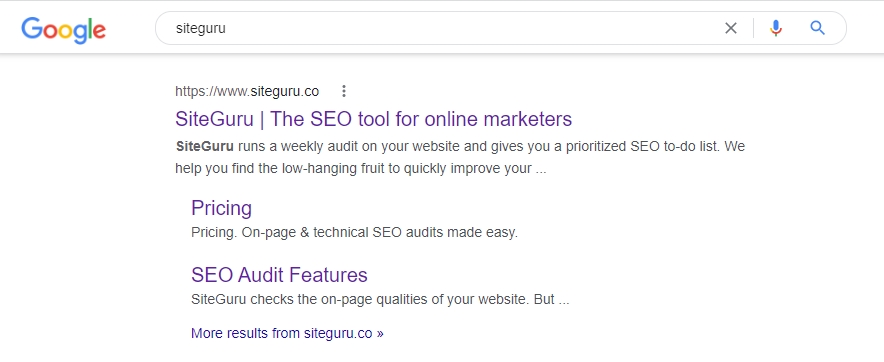
The one place your domain name shows up in search is navigational queries, where someone searches for your brand or domain directly.
Myth: domain age affects your SEO
It doesn't. Several Google employees have confirmed that the age of your domain is not a ranking factor.
Buying an aged domain can even backfire. You can inherit a bad backlink profile, low-quality content, and past penalties. Buying an expired domain to trade on its old reputation is now against Google's spam policies (its "expired domain abuse" rule, in force since May 2024), and sites that do it can be demoted or dropped from search. So there is no need to hunt for a second-hand domain that matches your brand. This myth probably comes from the fact that it takes time to build up authority and links, which is separate from the domain's age.
Myth: your domain registration period affects your SEO
It doesn't. A common claim is that registering your domain for several years ranks you higher than registering for one. That isn't how it works. How far ahead you pay your registrar is between you and them, and Google has said more than once that it does not use registration length as a ranking factor.
Google does pay attention to a change in domain ownership, especially if you also change the domain name or replace most of the content.
- If you are not changing the domain name, try to stay on the same host (to avoid slowing the site down) and keep the same WhoIs owner.
- If you are changing the domain name, set up 301 redirects to the new pages, get your backlinks updated to the new URLs, create a fresh sitemap, update Google Analytics, and verify the new domain in Google Search Console.
Myth: Domain Authority affects your ranking
It doesn't. Backlinks do. Domain Authority (DA) is a metric built by Moz to predict how a site might perform, and Ahrefs' Domain Rating (DR) is the same idea. They are useful gauges of your link-building progress, but Google does not use them, so they do not affect your rankings directly.
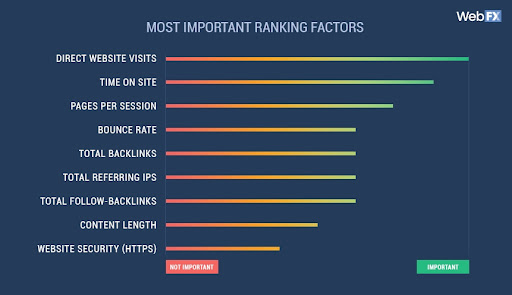
Source: WebFX
These scores still come up in SEO conversations because DA and DR look at your backlink profile, and Google does use links to understand your site. So DA is a handy proxy for comparing your site to others in your niche, even though Google never looks at the number itself.
Myth: your top-level domain affects your SEO
It doesn't, at least not for the common ones. Your top-level domain (TLD) is the ending of your domain, like .com or .net. TLDs act as identifiers: .edu signals an educational institution, and .gov is reserved for the US government.
Years ago, .com carried a small advantage because it helped bots place a site. That is no longer the case. Google now treats all standard, non-local domains the same, whether you use .com, .net, or another common TLD.
So what actually gives a domain its SEO strength?
Authority, and that comes mostly from backlinks. Google still leans on links to judge how trustworthy a site is, which is the idea behind PageRank. That authority builds up on your domain over time, so an established domain with a strong link profile can outrank a newer one on the same topic.
This is also why an aged domain can look tempting: you might inherit its existing links. It is risky for the same reason, because you can inherit its penalties and low-quality history too. Either way, the value is in the links, not the letters in the name. If you want to build that strength, focus on earning good backlinks, not on finding the perfect domain string.
Why your domain name still matters
Your domain name doesn't affect your SEO directly, but it can affect it indirectly.
Your domain defines your brand and tells people who you are, which builds trust. A professional, credible name gives you an edge in the search results: more people click your link when it looks trustworthy. Better click-through rates and engagement are things Google does pay attention to, so a strong domain name helps your SEO the long way around.
How to choose the right domain name
Make it brandable
Pick a name that is simple, unique, and easy to remember, so you stand out. Think www.coca-cola.com, not www.bestsoftdrinkintheworld.com.
Keep it short
Short names are easier to say, type, and remember. www.apple.com works. www.wesellthebestcomputersintheworld.com does not.
Make it memorable
A memorable domain means customers can find you again without a search. Over time they will type your domain straight into the address bar, and they will recognize you among competitors in the results.
Prefer a common TLD
A common ending like .com or .net is not a ranking factor, but it is a psychological one. Would you rather click a .com or a .xyz? Familiar TLDs add a little credibility, so choose one where you can.
The verdict: your domain name affects your SEO indirectly
Your domain name does not directly change where you rank, but it does shape how well your site performs by influencing trust and clicks. Searchers reward names that are short, memorable, and credible.
So if you are unhappy with your rankings, don't blame your domain. Of all the ranking factors, it matters the least. Instead, grab a free website SEO audit and find out exactly what to improve.